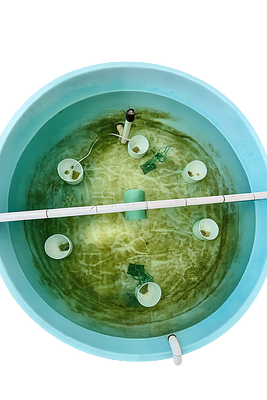
Current projects include designing and deploying in-situ octopus habitats to evaluate how shelter availability and habitat structure influence occupancy, movement, behavior, and local ecological interactions. These habitat systems also provide standardized locations for monitoring octopuses through time and examining how individuals respond to environmental variability and changes in prey availability.
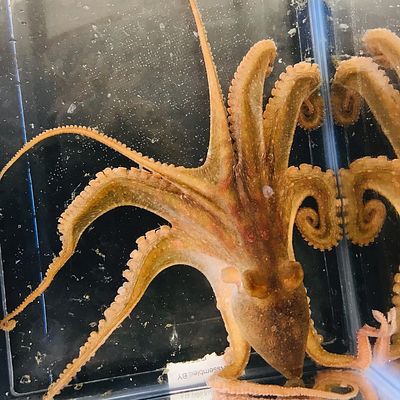
In captive settings, we conduct controlled predator–prey experiments to investigate prey detection, selection, handling behavior, capture success, and decision-making under different environmental conditions. These experiments allow us to test how factors such as prey identity, prey abundance, habitat complexity, and previous experience influence octopus foraging strategies.
We also use genetic and molecular methods to analyze stomach contents and other dietary samples. DNA-based identification can reveal prey species that are difficult to identify visually because they have been partially digested or lack diagnostic hard parts. These studies help characterize octopus diets, quantify individual variation in prey use, and evaluate how foraging choices change across habitats, seasons, and populations.
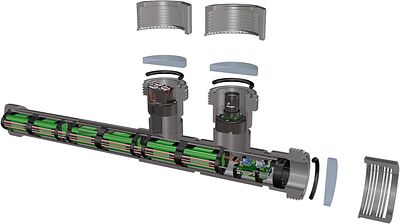
Underwater camera systems are used to observe octopuses in their natural environments with minimal disturbance. Continuous and remotely operated video monitoring allows us to document activity patterns, den use, prey encounters, predator interactions, movement, and other behaviors that may be difficult to observe directly. Together, these complementary approaches improve our understanding of octopuses as adaptable predators and their broader ecological roles within coastal marine communities. This research also provides information that can support the conservation and management of the habitats and food webs on which octopuses depend.